
“Oceanfront” and “beachfront” get used as if they’re the same thing. In Grand Cayman they aren’t, and the gap between them is the single most common reason a villa doesn’t match what someone pictured. Both put you on the water. Only one guarantees you can walk off your terrace onto soft sand and into the sea. Here’s the honest distinction, and how to make sure you book the one you actually want.
The plain-English difference
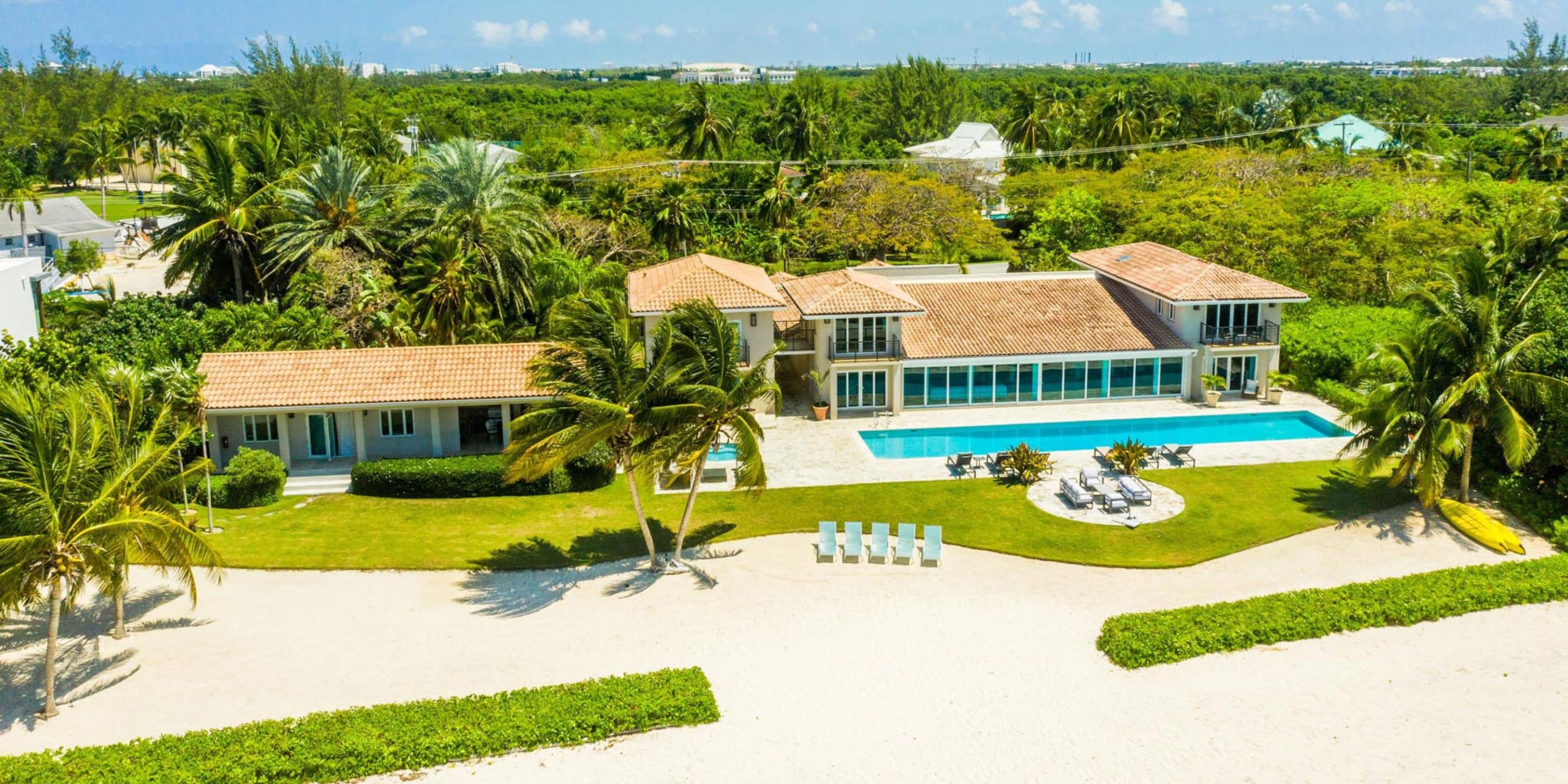
- Beachfront means there’s a sandy beach directly in front of the property — you step off the grounds onto sand and into the water. This is what most people picture, and on this island it’s more specific (and less universal) than the word suggests.
- Oceanfront means the property sits directly on the sea, but the shoreline in front of it may be sand or it may be ironshore or reef. The view and the water are right there; the entry may not be a walk onto a beach.
Neither is better — they’re different products. A dramatic oceanfront villa on ironshore with the sea crashing below can be spectacular. It’s just not the barefoot-onto-sand experience, and the two shouldn’t be confused.
Why Grand Cayman specifically blurs the line
The west coast — Seven Mile Beach — is the island’s long, continuous soft-sand beach, so beachfront there is straightforward. Elsewhere, the shoreline is a patchwork. Much of the north side (Rum Point, Cayman Kai) has calm, sandy, protected entry. The south and east coasts mix sandy pockets with ironshore (the hard, fossilized limestone that forms much of Cayman’s coast) and reef right offshore. So two “oceanfront” villas a mile apart can offer completely different water access.
That’s not a knock on the south and east — reef-fronted water is often superb for snorkeling straight off the property, and ironshore coastline is part of what makes those areas dramatic and private. It just means “oceanfront” alone doesn’t tell you whether you’ll be swimming off a sandy beach.
What to check before you book
- Ask specifically: is the entry sand, ironshore, or reef? Don’t infer it from “oceanfront.”
- If a soft-sand beach is non-negotiable, confirm “beachfront with sandy entry” in writing, or choose Seven Mile / the calm north-side sand.
- If you mainly want the view and snorkeling, oceanfront on reef can be ideal — just go in knowing the entry.
- Look at photos of the actual shoreline, not just the sunset view. The waterline tells you more than the horizon does.
- Traveling with young kids or weaker swimmers? Prioritize calm, sandy, shallow entry — the north side (Rum Point, Cayman Kai) is built for it.
Examples across the island
- Sandy beachfront, calm water: the beachfront SunRays in Cayman Kai and Timeless Paradise at Rum Point sit on the calm, sandy north side.
- North-side oceanfront, protected water: Twin Palms and Ocean Kai — Rum Point’s shallow, glassy North Sound.
- South Sound oceanfront: Villa Mora 5BR and Blue Serenity — genuine oceanfront close to town, where it’s worth confirming the exact entry per property.
For how the coasts compare overall, see where to stay in Grand Cayman.
Booking with us means you can actually ask
This is exactly where booking with us pays off. Instead of guessing from a listing headline, you ask the team that manages the home a plain question — sand or ironshore, calm or exposed, how far to the swimmable stretch — and get a straight answer before you commit. No mismatch on arrival, and every charge itemized in the written quotation.
Browse luxury villas across Grand Cayman →
Frequently asked questions
What’s the difference between oceanfront and beachfront in Grand Cayman?
Beachfront means a sandy beach is directly in front of the property, with sand-and-sea entry. Oceanfront means the property sits on the sea, but the shoreline may be sand, ironshore, or reef. All beachfront is oceanfront; not all oceanfront is beachfront.
What is ironshore?
Ironshore is the hard, fossilized limestone rock that forms much of Grand Cayman’s coastline, especially on the south and east. It can make for dramatic oceanfront settings and good snorkeling, but it isn’t a soft-sand beach entry.
Which is better, oceanfront or beachfront?
Neither — they’re different. Beachfront suits those who want to walk onto sand and swim easily, especially families. Oceanfront on reef or ironshore can be spectacular for views and snorkeling. Choose based on how you want to use the water.
How do I make sure I book a villa with a sandy beach?
Don’t rely on the word “oceanfront.” Ask specifically whether the entry is sand, ironshore, or reef, look at photos of the actual shoreline, and confirm sandy beachfront in writing if it’s essential.


.webp)