Tulum’s beaches aren’t one continuous strip — the character changes noticeably as you move along the coast, from the beach-club-lined road south of town to quiet bays where the loudest thing most days is the wind. Here’s a straight guide to the stretches worth knowing, what each is actually like, and where to stay if you want it on your doorstep.
One honest note that applies to all of them: like the rest of the Riviera Maya, this coastline sees seasonal sargassum seaweed, generally heaviest June through August and clearest November through March. 2026 has been flagged by University of South Florida forecasters as a potentially heavier-than-usual year. It affects the open coast unevenly rather than every beach equally, but it’s worth checking current conditions close to your dates rather than assuming clear water — see our full Tulum travel guide for the season-by-season detail.
Tulum Beach Zone — the famous stretch, beach clubs and ruins
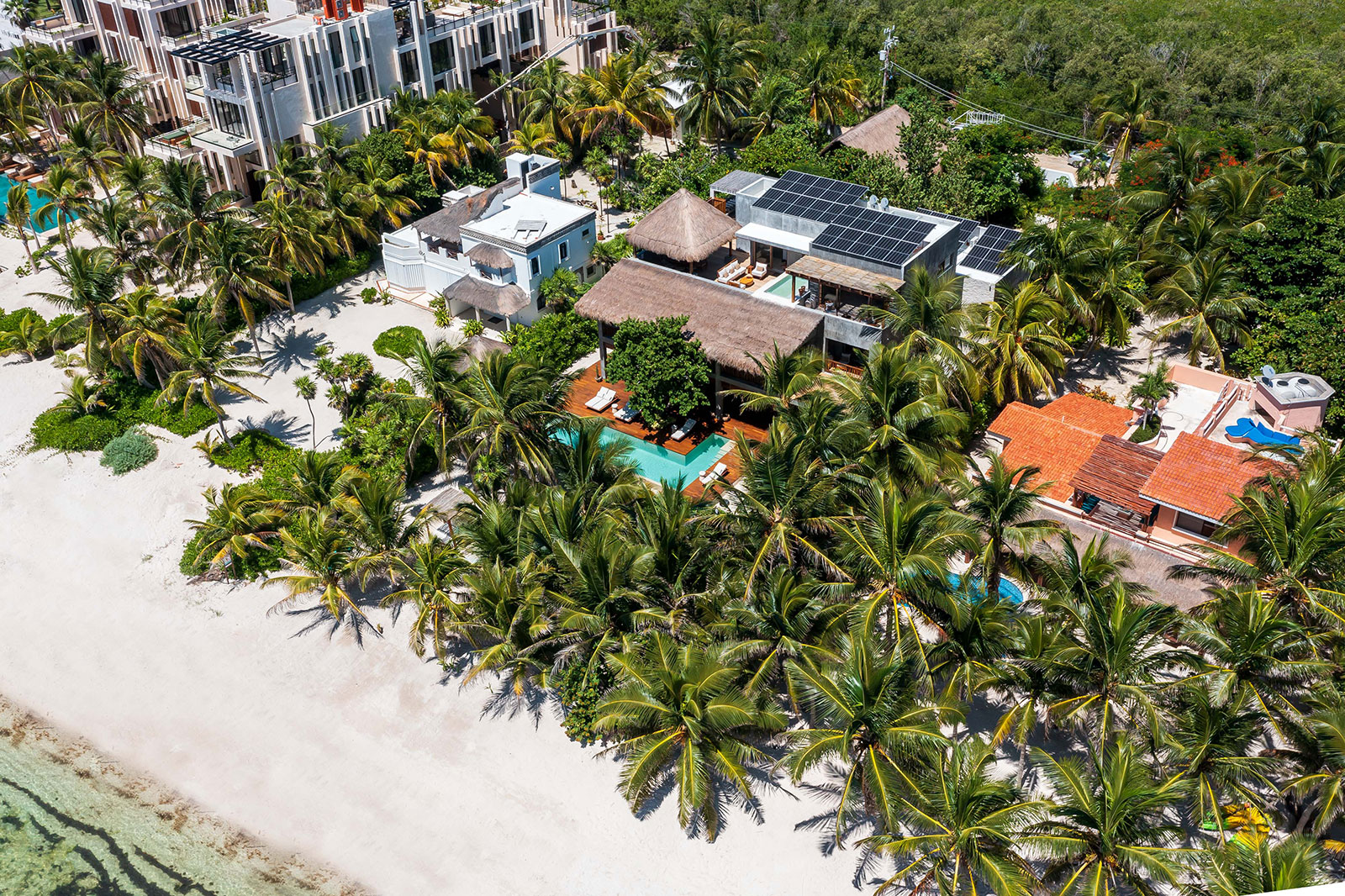
The coastal road south of town is what most people picture: a long run of soft sand backed by beach clubs, boutique hotels and restaurants, with the clifftop Tulum ruins anchoring the north end. It’s the most developed and busiest part of the coast, and also the most convenient if you want beach clubs, dining and the Tulum ruins within a short walk or bike ride. Full rundown in our Tulum Hotel Zone guide.
Stay nearby: the 12-bedroom Villa Shambala or the 6-bedroom Hacienda Paraiso. Browse the Tulum Beach Zone villas page.
Soliman Bay — a quiet bay a few minutes north
About 9 miles (roughly 13 minutes) north of town, Soliman Bay swaps the beach-club scene for a mile-long stretch of sand lined with little more than a handful of houses, a boutique hotel, and fishing boats. The reef sits close offshore — part of the Mesoamerican Barrier Reef System, the second-longest reef system in the world — making it a genuine snorkeling spot rather than just a quiet place to sit. Full detail in our Soliman Bay guide.
Stay nearby: the 12-bedroom Lol Beh or the 8-bedroom Villa Amaite. Browse the Soliman Bay villas page.
Tankah Bay — calm water and cenotes at the shoreline
Immediately north of Soliman Bay, Tankah Bay is a similarly low-key stretch, notable for cenotes that surface right near the coast — some villas here back directly onto a freshwater cenote as well as the sea. It’s a good fit if you want beachfront and a private cenote in the same stay, without the drive inland that most cenote visits require.
Stay nearby: the 9-bedroom Villa Naj Kan or Casa Xuul. Browse the Tankah Bay villas page.
Sian Ka’an — the edge of the biosphere reserve
South of the main beach road, where the Sian Ka’an Biosphere Reserve begins, the coast turns wilder and far less built up — mangroves, tidal flats, and a much smaller footprint of homes. This is the stretch for travelers who want proximity to the reserve’s wildlife and boat excursions over beach-club convenience.
Stay nearby: the 5-bedroom Casa Nalum. Browse the Sian Ka’an villas page.
Which stretch for which trip?
- Beach clubs, restaurants and the ruins nearby: Tulum Beach Zone.
- Quiet, a real reef for snorkeling: Soliman Bay.
- Beachfront plus a private cenote: Tankah Bay.
- Nature reserve, wildlife, boat excursions: Sian Ka’an.
Booking a beachfront villa direct
If a specific stretch of coast matters to you, book the villa directly and confirm the water access at that exact property — sandy entry, how sheltered the bay is, current seasonal conditions. Booking with us gets you straight answers from the managing team and every charge itemized in the written quotation.
Browse luxury villas across Tulum →
Frequently asked questions
What is the best beach in Tulum?
It depends on what you want. The Tulum Beach Zone is the best-known stretch, with beach clubs, restaurants and the clifftop ruins nearby. For quiet with a real reef to snorkel, Soliman Bay is the standout; for beachfront paired with a cenote, Tankah Bay.
Which Tulum beach is quietest?
Soliman Bay and Tankah Bay, a short drive north of the main beach road, see far less foot traffic than the Tulum Beach Zone.
Is there sargassum seaweed in Tulum?
Seasonally, yes — it affects the open Riviera Maya coastline, generally heaviest June through August and clearest November through March. 2026 has been forecast as a potentially heavier year than usual, so it’s worth checking current conditions before finalizing plans.
Can you snorkel from the beach in Tulum?
Soliman Bay is the best option directly from shore — the reef sits close offshore there. Elsewhere, most snorkeling and diving trips are organized by boat to the reef or to cenotes inland.
.webp)
.webp)